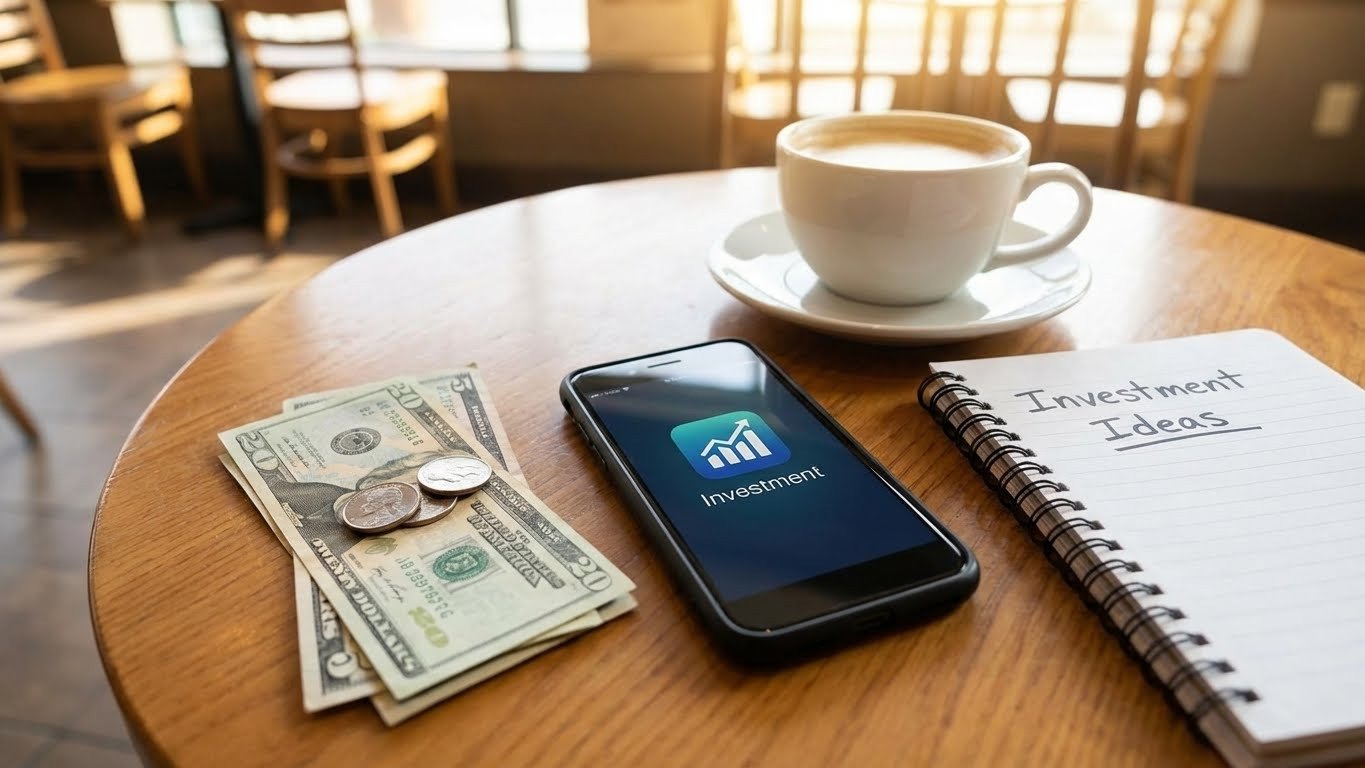
The myth that investing requires thousands of dollars keeps millions of Americans on the sidelines while their money loses value to inflation. The truth? You can start building wealth today with less than the cost of a nice dinner out. This comprehensive guide explores proven micro investing ideas in the USA that allow anyone to begin their investment journey with just $50 or less.
Why Small Investments Matter in 2025
The landscape of beginner investing in the US has transformed dramatically over the past decade. Thanks to fractional shares, robo-advisors, and zero-commission platforms, the barriers that once kept everyday Americans from participating in wealth-building opportunities have virtually disappeared.
When you invest with 50 dollars in the USA today, you’re not just putting aside pocket change. You’re establishing patterns, learning market dynamics, and harnessing the power of compound growth. Even small investments in 2025 can grow substantially over time, especially when you consistently add to them.
Consider this: $50 invested monthly at an average 10% annual return grows to over $38,000 in 20 years. The amount you start with matters far less than simply starting and staying consistent.
Understanding Your $50 Investment Options
Before diving into specific micro investing ideas in the USA, let’s establish what makes a good small investment opportunity:
Low or No Minimum Requirements – The platform should allow you to start with your available capital without requiring larger deposits.
Minimal Fees – When investing small amounts, fees can consume a significant portion of your returns. Look for zero-commission options whenever possible.
Educational Resources – As a beginning investor, access to learning materials helps you make informed decisions and grow your financial literacy.
Accessibility – The investment should be easy to understand and manage through user-friendly mobile apps or websites.
Growth Potential – Even small investments should have realistic pathways to meaningful returns over time.
Top Platforms to Invest With 50 Dollars USA
Robinhood: Zero-Commission Stock and ETF Investing
Robinhood revolutionized beginner investing in the US by eliminating commission fees entirely. With no minimum deposit requirement, you can literally start with any amount, making it perfect for small investments in 2025.
What You Can Buy:
- Fractional shares of expensive stocks like Amazon or Google
- Exchange-traded funds (ETFs) for instant diversification
- Cryptocurrency options (though more volatile)
Best For: Americans who want direct control over their investment choices and enjoy researching individual companies.
Getting Started: Download the app, complete the verification process (typically 24 hours), link your bank account, and start purchasing fractional shares immediately.
With $50, you could buy a small piece of several different companies, creating an instantly diversified portfolio without needing thousands of dollars.
Acorns: Automated Micro Investing
Acorns pioneered the round-up investment strategy, making it one of the most popular micro investing ideas in the USA. The platform rounds up your everyday purchases to the nearest dollar and invests the spare change automatically.
How It Works: Buy coffee for $3.75, and Acorns rounds up to $4.00, investing the $0.25 difference. These micro-investments accumulate quickly without you noticing.
Pricing: Starting at $3 per month, which includes a checking account, retirement account, and investment account.
Best For: Americans who struggle with investing discipline and want a completely automated approach.
While the monthly fee might seem high relative to a $50 initial investment, the automation value and additional accounts can justify the cost if you consistently use the round-up feature.
Stash: Beginner-Friendly Investing Education
Stash combines investment access with comprehensive financial education, making it ideal for beginner investing in the US. The platform curates investment options based on your interests and values.
Unique Features:
- Personalized investment recommendations
- Banking features integrated with investing
- Educational content that explains every investment option
- Fractional shares starting at just $5
Pricing: Plans start at $3 per month
Best For: New investors who want guidance and education alongside their investment accounts.
Stash’s approach to small investments in 2025 emphasizes learning while investing, helping you understand why you’re buying what you’re buying rather than just executing trades blindly.
Public: Social Investing Platform
Public brings a community aspect to investing, allowing you to see what other investors are buying and discuss investment ideas. It’s completely commission-free with no account minimums.
Standout Features:
- Follow experienced investors and see their portfolios
- Discuss investments with a community of learners
- Purchase fractional shares of stocks and ETFs
- Zero trading commissions or management fees
Best For: Americans who learn best through community and want to understand the reasoning behind investment decisions.
When you invest with 50 dollars in the USA through Public, you’re also gaining access to collective wisdom from thousands of other investors sharing their research and perspectives.
Betterment: Robo-Advisor for Hands-Off Investing
Betterment requires no minimum deposit and creates a diversified portfolio based on your goals and risk tolerance. It’s one of the most established robo-advisors in the micro investing ideas USA space.
How It Works: Answer questions about your financial goals, timeline, and risk comfort. Betterment then builds and manages a portfolio of ETFs automatically rebalanced to maintain your target allocation.
Pricing: 0.25% annual fee (so $0.125 annually on a $50 investment)
Best For: Beginners who want professional-grade portfolio management without the complexity of choosing individual investments.
This represents true set-it-and-forget-it investing, where your $50 works for you with minimal ongoing effort required.
Specific Investment Strategies With $50
Strategy 1: The Index Fund Foundation
One of the smartest ways to begin beginner investing in the US is by purchasing fractional shares of broad market index funds. These funds track entire market segments, providing instant diversification.
Recommended Starting Point: Invest your $50 in an S&P 500 index fund ETF like VOO or SPY. This single purchase gives you ownership in 500 of America’s largest companies, including Apple, Microsoft, Amazon, and hundreds of others.
Why This Works:
- Historically returns about 10% annually over long periods
- Requires zero research into individual companies
- Automatically diversified across sectors and industries
- Low expense ratios (often under 0.10% annually)
This approach to small investments in 2025 mirrors what billionaire investors like Warren Buffett recommend for most Americans.
Strategy 2: The Dividend Growth Starter
Another micro investing idea in the USA involves purchasing fractional shares of dividend-paying stocks. These companies pay you regularly just for owning their shares, providing both growth potential and passive income.
Dividend Aristocrats to Consider:
- Johnson & Johnson (healthcare)
- Coca-Cola (consumer goods)
- Procter & Gamble (consumer staples)
- Realty Income (real estate)
Starting Approach: Use your $50 to buy fractional shares of 2-3 dividend-paying companies. Even with small holdings, you’ll receive actual dividend payments (usually quarterly) that can be reinvested to buy more shares.
This strategy teaches you about passive income while your investment grows through both share price appreciation and dividend reinvestment.
Strategy 3: The Thematic Investing Approach
Many platforms now offer thematic ETFs that invest in specific trends or sectors, allowing you to align your investments with your interests or beliefs about future growth.
Popular Themes for 2025:
- Clean energy and sustainability
- Artificial intelligence and technology
- Healthcare innovation
- Cybersecurity
- E-commerce and digital payments
Implementation: Choose one theme you understand or find interesting, then invest with 50 dollars in the USA in a related thematic ETF. This combines diversification with focused exposure to areas you believe will grow.
This approach makes investing more engaging because you’re supporting sectors and innovations you care about while potentially benefiting from their growth.
Strategy 4: The Dollar-Cost Averaging Plan
Rather than investing $50 once, consider a recurring investment strategy. Many platforms allow automatic weekly or monthly investments of smaller amounts.
Example Plan: Set up automatic $10 weekly investments into a broad market index fund. This strategy, called dollar-cost averaging, reduces the impact of market volatility by spreading your purchases over time.
Benefits:
- Removes emotion from investing decisions
- Buys more shares when prices are low
- Builds a consistent saving habit
- Averages out your purchase price over time
This represents one of the most powerful micro investing ideas in the USA for building long-term wealth with limited capital.
Beyond Traditional Stocks: Alternative $50 Investments
High-Yield Savings Accounts as Investment Tools
While not technically an investment, high-yield savings accounts currently offering 4-5% interest deserve consideration for beginner investing in the US, especially for your emergency fund portion.
Top Options:
- Marcus by Goldman Sachs
- Ally Bank
- American Express Personal Savings
- CIT Bank
When This Makes Sense: If you don’t have an emergency fund yet, putting your first $50 in a high-yield savings account provides risk-free returns while building your financial safety net. Once you have 3-6 months of expenses saved, shift focus to higher-return investments.
Treasury Bonds Through TreasuryDirect
The U.S. government allows Americans to purchase Treasury bonds directly for as little as $25, making this one of the safest small investments in 2025.
I Bonds (Inflation-Protected): These bonds adjust their interest rate based on inflation, protecting your purchasing power. The current rate adjusts every six months based on inflation data.
Limitations:
- Must hold for at least 12 months
- Lose three months of interest if cashed before five years
- Can only purchase $10,000 per person annually
Best For: Extremely conservative investors who prioritize capital preservation over high returns.
When you invest with 50 dollars in the USA through Treasury bonds, you’re lending money to the government with virtually zero default risk.
Fractional Real Estate Through REITs
Real Estate Investment Trusts (REITs) allow you to invest in property portfolios without buying actual real estate. Many REITs trade on stock exchanges and can be purchased as fractional shares.
Popular REIT Options:
- Realty Income (monthly dividends)
- Vanguard Real Estate ETF (diversified exposure)
- Public Storage (self-storage facilities)
- American Tower (cell tower infrastructure)
Advantages:
- Exposure to real estate without property management hassles
- Often pay higher dividends than regular stocks
- Diversification beyond traditional stocks and bonds
This micro investing idea in the USA adds real estate exposure to your portfolio for the price of lunch.
Cryptocurrency Micro-Investing
While controversial and volatile, cryptocurrency represents a modern investment category that’s accessible with small amounts. Most platforms allow purchases as low as $1.
Starting Points:
- Bitcoin (the original cryptocurrency)
- Ethereum (smart contract platform)
Critical Warnings:
- Extremely volatile with potential for significant losses
- Not FDIC insured or regulated like traditional investments
- Should represent only a small portion of any beginner portfolio
- Only invest money you can afford to lose completely
Recommended Allocation: If interested in crypto as part of your small investments in 2025, limit it to 5-10% of your total investment capital until you understand the risks thoroughly.
Building Your $50 Investment Plan
Step 1: Define Your Investment Goal
Before making any investment decision, clarify what you’re investing for:
- Retirement (30+ years away)
- Major purchase in 5-10 years
- General wealth building
- Learning and experience
Your timeline determines your risk tolerance and appropriate investment vehicles.
Step 2: Choose Your Platform
Based on your goals and learning style, select one platform to start:
- Hands-on learners: Robinhood or Public
- Automation seekers: Acorns or Betterment
- Education focused: Stash
- Ultra-conservative: High-yield savings or Treasury bonds
Starting with a single platform prevents confusion and helps you learn one system thoroughly before expanding.
Step 3: Make Your First Investment
Once your account is funded with your initial $50, make your first purchase:
- Broad market index fund for balanced exposure
- Dividend stock for passive income experience
- Thematic ETF aligned with your interests
The specific choice matters less than taking action and getting started with beginner investing in the US.
Step 4: Set Up Recurring Contributions
Even if it’s just $10 per week or $25 per paycheck, automate additional contributions. These micro investing ideas in the USA compound fastest when you consistently add to your initial investment.
Step 5: Educate Yourself Continuously
Spend 30 minutes weekly learning about investing:
- Read platform educational resources
- Follow reputable financial education accounts
- Listen to beginner-friendly investing podcasts
- Join online communities of beginner investors
Your knowledge compounds alongside your money, making both more valuable over time.
Common Mistakes to Avoid With Small Investments
Mistake 1: Waiting for “Enough” Money
The biggest mistake in small investments 2025 is not starting because you think $50 isn’t enough. Time in the market beats timing the market, and starting with any amount beats waiting indefinitely for a larger sum.
Mistake 2: Over-Trading
When you invest with 50 dollars in the USA, resist the urge to constantly buy and sell. Each trade (even commission-free ones) has tax implications, and frequent trading typically reduces returns compared to buy-and-hold strategies.
Mistake 3: Ignoring Fees
A $3 monthly platform fee represents 6% annually on a $50 investment. While some fees are worth paying for automation or education, understand what you’re paying and ensure the value justifies the cost at your investment level.
Mistake 4: Putting All $50 in One Risky Investment
Avoid concentrating your entire starting capital in highly speculative investments like penny stocks or obscure cryptocurrencies. Diversification matters even with small amounts.
Mistake 5: Giving Up After Market Declines
Markets fluctuate. Your $50 might be worth $45 next month or $55. Focus on your long-term strategy rather than short-term value changes. Market declines actually benefit you by allowing future contributions to buy more shares at lower prices.
Tracking Your Investment Progress
Set Realistic Milestones
Create achievable goals to maintain motivation:
- First $100 invested
- First dividend payment received
- First month of consistent contributions
- Portfolio reaching $500
- One year of consistent investing
Celebrate these achievements to reinforce positive investing habits.
Monitor Quarterly, Not Daily
Check your investment performance once per quarter rather than daily. Frequent monitoring increases stress and tempts you to make emotional decisions during normal market volatility.
Focus on Contributions, Not Just Returns
In the early stages of beginner investing in the US, your contributions matter far more than investment returns. Growing your monthly investment from $50 to $100 doubles your portfolio growth rate more effectively than finding investments with slightly higher returns.
Graduating Beyond $50 Investments
When to Expand Your Investment Strategy
As your income grows and investment knowledge deepens, consider these progression steps:
- Increase monthly contributions gradually
- Add new asset classes (bonds, international stocks, commodities)
- Open tax-advantaged accounts (IRA, 401k)
- Explore more sophisticated strategies (covered calls, real estate crowdfunding)
Building Toward a Complete Investment Portfolio
Your initial $50 investment represents one piece of a larger financial picture. As you grow, work toward:
- 3-6 months expenses in emergency savings
- Retirement account contributions (traditional or Roth IRA)
- Taxable brokerage account for medium-term goals
- Appropriate insurance coverage protecting your assets
These micro investing ideas in the USA create the foundation for a comprehensive wealth-building strategy.
Tax Considerations for Small Investors
Understanding Investment Taxes
Even when you invest with 50 dollars in the USA, you’ll eventually face tax implications:
- Dividend income is taxable in the year received
- Selling investments for profit creates capital gains
- Holding investments longer than one year qualifies for lower long-term capital gains rates
Keeping Good Records
Track your investment purchases, dividends received, and any sales. Most platforms provide year-end tax documents, but maintaining your own records helps you understand your tax situation.
Tax-Advantaged Account Benefits
Once you accumulate more capital, prioritize tax-advantaged accounts like IRAs that allow your small investments in 2025 to grow tax-free or tax-deferred, significantly boosting long-term returns.
Real Stories: Americans Who Started With $50
The Consistent Contributor
Maria began with $50 in a broad market index fund through Robinhood. She committed to adding just $25 weekly. Four years later, her disciplined approach resulted in a portfolio exceeding $6,000, demonstrating how consistency trumps starting capital.
The Dividend Reinvestor
James invested his initial $50 in dividend-paying stocks and enabled automatic dividend reinvestment. Without adding another dollar for two years, his quarterly dividends purchased additional fractional shares. His $50 grew to $73 through appreciation plus reinvested dividends, teaching him the power of passive income.
The Index Fund Enthusiast
Sarah split her $50 between two broad market ETFs and simply left them alone while researching investing. Five years later, that $50 grew to nearly $90 through market appreciation alone. More importantly, she gained confidence that led her to invest significantly more as her income increased.
These examples illustrate how beginner investing in the US with small amounts creates both financial returns and investing confidence that leads to greater wealth-building success.
Frequently Asked Questions
Is $50 really enough to start investing?
Absolutely. While $50 won’t make you wealthy overnight, it’s enough to establish investing habits, learn how markets work, and begin the compounding process. Every wealthy investor started somewhere, often with modest amounts.
Should I pay off debt before investing?
Generally, yes for high-interest debt like credit cards. However, you can simultaneously make minimum debt payments while starting small investments in 2025 to build the investing habit. Once high-interest debt is eliminated, increase your investment contributions.
How soon will I see returns?
Investment returns are measured in years, not weeks or months. While you might see gains quickly during bull markets, expect volatility in the short term. Focus on consistent contributions rather than timing perfect market entries.
What if I lose my $50?
While possible with risky investments, properly diversified investments in index funds or established companies make total loss extremely unlikely. Markets fluctuate, but historically recover and grow over time.
Can I withdraw my money if needed?
Yes, though you may owe taxes on gains and potentially miss future growth. This is why maintaining an emergency fund separate from investments is crucial.
Taking Action Today
The difference between reading about micro investing ideas in the USA and actually building wealth is action. You now have the knowledge to invest with 50 dollars in the USA effectively. The only remaining step is beginning.
Choose one platform that resonates with your style. Download the app or visit the website. Complete the account setup process. Transfer your first $50. Make your first purchase. These simple actions separate dreamers from doers in the world of beginner investing in the US.
Remember, investment success isn’t about having large sums to invest initially. It’s about starting with what you have, learning continuously, and contributing consistently. Your future self will thank you for the small investments in 2025 that you make today.
Conclusion: Small Beginnings, Significant Futures
The myth that investing requires wealth keeps millions of Americans from participating in one of the most powerful wealth-building tools available. The reality? You can start your investment journey today with less than the cost of a tank of gas.
These micro investing ideas in the USA provide accessible pathways for anyone to begin building wealth, regardless of current financial circumstances. Whether you choose index funds, dividend stocks, robo-advisors, or Treasury bonds, the act of starting matters far more than the amount you start with.
Your $50 investment today represents more than just money. It represents a decision to take control of your financial future, to learn about wealth building, and to harness the power of compound growth. Twenty years from now, you won’t remember the $50 you invested today, but you’ll certainly appreciate the discipline, knowledge, and wealth it helped create.
Stop waiting for the perfect moment or larger sum. Start today with what you have. Begin your beginner investing in the US journey right now. Download an app, open an account, and make your first investment. Your wealthy future self is counting on the decision you make today.
Disclaimer: This article provides educational information about investing options and should not be considered personalized financial advice. All investments carry risk, including potential loss of principal. Consider your financial situation, goals, and risk tolerance before investing. Consult with a qualified financial advisor for personalized guidance.