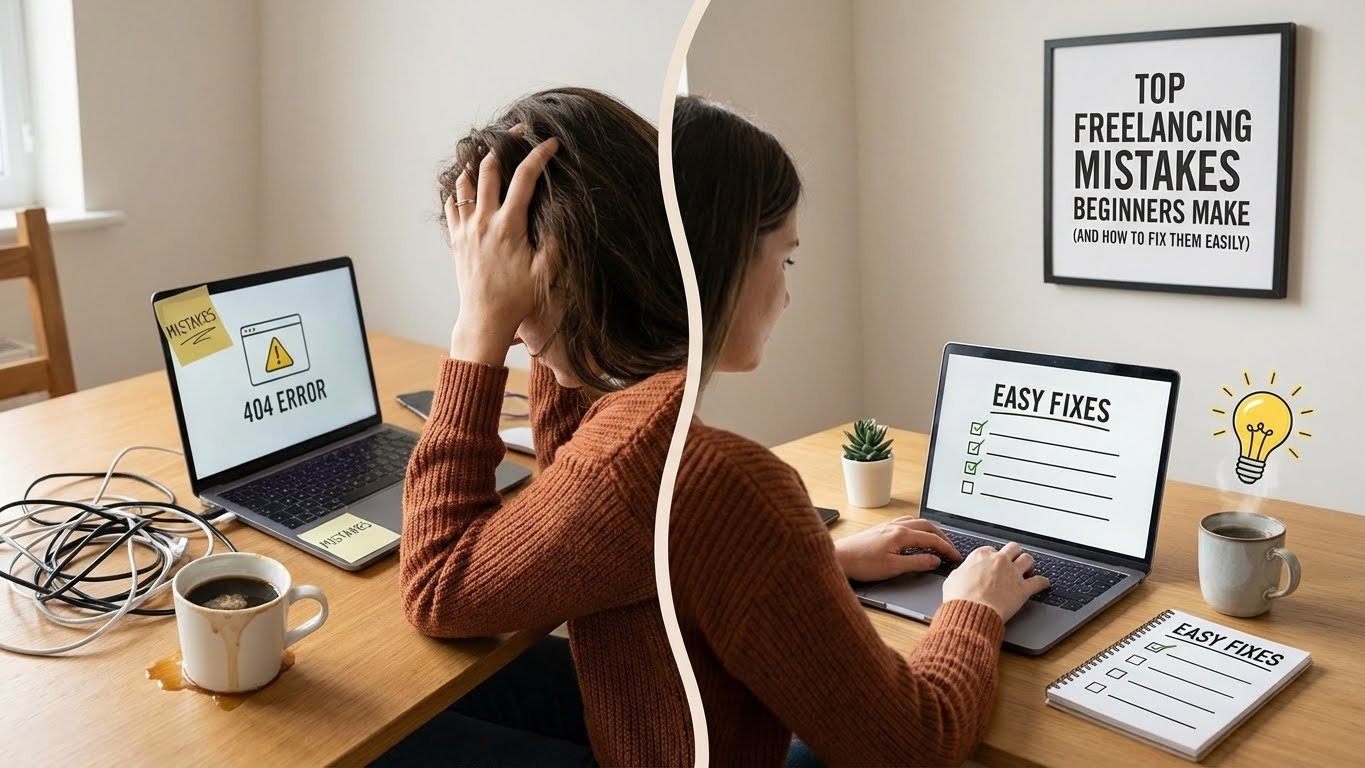
Starting your freelancing journey can feel overwhelming. Every year, thousands of Americans dive into the gig economy with high hopes, only to stumble over common freelancing mistakes beginners make. The good news? Most of these errors are completely fixable with the right freelance tips for newbies USA professionals have already learned the hard way.
Whether you’re a graphic designer, writer, developer, or virtual assistant, understanding how to avoid freelance errors will save you time, money, and frustration. This guide will walk you through the most critical mistakes new freelancers make and provide actionable solutions to help you improve freelance profile performance and build a sustainable business.
Mistake #1: Setting Prices Too Low
The Problem
One of the most devastating freelancing mistakes beginners make is undervaluing their work. New freelancers often think they need to be the cheapest option to win clients. You set your rate at $10 per hour when competitors charge $50, hoping the low price will attract business.
This strategy backfires in multiple ways. Low prices attract difficult clients who don’t respect your time, make it impossible to cover business expenses, and position you as inexperienced or low-quality.
The Fix
Research market rates for your skill level and location. Websites like Glassdoor, PayScale, and specialized freelance communities provide salary benchmarks. For freelance tips for newbies USA markets specifically, aim for rates that account for self-employment taxes (roughly 15.3%), lack of benefits, unpaid administrative time, and income fluctuations.
Start with mid-range pricing for your experience level. If you’re genuinely a beginner, don’t charge expert rates, but don’t go bargain-basement either. A reasonable starting rate for most freelance services in the USA ranges from $25 to $50 per hour, depending on the field.
Remember this essential freelance tip: you can always lower prices, but raising them with existing clients is difficult. Price yourself fairly from day one to avoid freelance errors that undermine your business before it starts.
Mistake #2: Creating a Generic, Incomplete Profile
The Problem
Your freelance profile is your digital storefront. Yet one of the most common freelancing mistakes beginners make is creating profiles that look exactly like everyone else’s or leaving sections incomplete. Generic headlines like “Hardworking Freelancer” or “I Can Do Anything” tell potential clients nothing about your unique value.
Incomplete profiles missing portfolio samples, detailed descriptions, or professional photos signal that you’re not serious about your business.
The Fix
Learning how to improve freelance profile presentation is crucial. Start with a compelling headline that includes your specialty and the benefit you provide. Instead of “Freelance Writer,” try “SEO Content Writer Helping E-commerce Brands Increase Organic Traffic.”
Write your profile description in the second person, speaking directly to your ideal client’s needs. Focus on the problems you solve rather than just listing skills. Include specific examples: “I’ve helped 15+ small businesses rank on Google’s first page” is far more compelling than “I’m good at SEO.”
Add portfolio pieces that showcase your best work. Even without paid experience, you can create sample projects. Writers can publish articles on Medium, designers can do spec work for fictional brands, and developers can build demo applications.
This approach to improve freelance profile visibility helps you stand out in crowded marketplaces and is among the most valuable freelance tips for newbies USA platforms reward with better search rankings.
Mistake #3: Not Having Contracts or Clear Agreements
The Problem
Excitement about landing your first clients can lead to one of the riskiest freelancing mistakes beginners make: starting work without a contract. You agree to terms over email or chat, then discover the client expects unlimited revisions, faster delivery, or additional services not discussed.
Without documentation, you have no protection when scope creep occurs or payment disputes arise.
The Fix
Create a standard contract template covering project scope, deliverables, timelines, payment terms, revision policies, and cancellation procedures. Free templates are available through legal resources like Docracy or Rocket Lawyer, though investing in a lawyer-reviewed contract is wise as your business grows.
For smaller projects on platforms like Upwork or Fiverr, use the platform’s built-in contract systems and ensure every detail is written in the project description. Never rely on verbal agreements or private messages outside the platform.
This freelance tip protects both you and your clients, setting clear expectations that prevent misunderstandings. Learning to avoid freelance errors in the contracting phase saves countless hours and potential legal headaches.
Mistake #4: Poor Time Management and Missing Deadlines
The Problem
Freedom and flexibility attract many to freelancing, but poor time management ranks among the top freelancing mistakes beginners make. Without a boss looking over your shoulder, it’s easy to procrastinate, underestimate project timelines, or overbook yourself.
Missing deadlines destroys your reputation faster than almost anything else. Clients talk, leave reviews, and won’t rehire freelancers who can’t deliver on time.
The Fix
Implement project management tools like Trello, Asana, or Notion to track all projects and deadlines. When estimating project timelines, calculate how long you think something will take, then add 50% buffer time. This accounts for revisions, unexpected complications, and other client work.
Use time-blocking techniques, dedicating specific hours to client work, administrative tasks, and marketing. The Pomodoro Technique (25-minute focused work sessions with 5-minute breaks) helps maintain productivity throughout the day.
Set internal deadlines 24-48 hours before client deadlines. This buffer means if emergencies arise, you still deliver on time. These freelance tips for newbies USA professionals swear by will help you build a reputation for reliability, leading to repeat clients and referrals.
Mistake #5: Neglecting Self-Promotion and Marketing
The Problem
Many new freelancers believe that simply creating a profile on Upwork or Fiverr is enough. They wait for clients to find them, falling victim to one of the most passive freelancing mistakes beginners make. Months pass with few or no inquiries, leading to discouragement and potentially giving up on freelancing altogether.
The freelance marketplace is incredibly competitive. Without active marketing, even talented freelancers remain invisible.
The Fix
Dedicate at least 30% of your working time to marketing, especially in your first year. This includes submitting proposals on freelance platforms, networking on LinkedIn, engaging in industry-specific online communities, and showcasing your expertise through content creation.
To improve freelance profile discoverability, optimize for platform search algorithms. Use relevant keywords in your profile, maintain high response rates, and regularly update your portfolio. On Upwork, for example, sending personalized proposals to job posts within hours of posting significantly increases your visibility.
Build a simple website or portfolio even if you primarily work through platforms. This establishes credibility and gives you a professional presence when networking. Use free platforms like Wix, WordPress, or Squarespace to get started without major investment.
These strategies to avoid freelance errors in marketing will keep your pipeline full and reduce the feast-or-famine cycle many freelancers experience.
Mistake #6: Accepting Every Project That Comes Your Way
The Problem
When starting out, desperation can lead to one of the most draining freelancing mistakes beginners make: saying yes to every project regardless of fit, payment, or client red flags. You take on work outside your expertise, accept impossibly low rates, or ignore warning signs of difficult clients.
This approach leads to burnout, portfolio dilution, and reputation damage when you can’t deliver quality work in unfamiliar areas.
The Fix
Define your niche and ideal client from the start. Create criteria for accepting projects: minimum rate, project types you enjoy, client communication style, and reasonable timelines. When opportunities don’t meet these criteria, politely decline.
Learning to say no is a crucial freelance tip that separates successful freelancers from struggling ones. Each bad-fit project consumes time and energy you could invest in finding better clients.
Watch for red flags during initial consultations: clients who want to see work before hiring, ask for significant discounts, have unrealistic expectations, are rude or dismissive, or pressure you to start immediately without proper agreements. These warning signs help you avoid freelance errors that waste time on clients who won’t value your work.
Starting out, you may need to be less selective, but even then, set minimum standards. As your business grows, increase selectivity to work with better clients on more interesting projects.
Mistake #7: Not Tracking Expenses and Income Properly
The Problem
Freelancing means running a business, but many fall into the trap of common freelancing mistakes beginners make around financial management. They don’t track expenses, mix personal and business finances, and arrive at tax season completely unprepared, facing unexpected bills and penalties.
Poor financial tracking also prevents you from understanding which services are profitable, what you actually earn per hour, and whether your business is growing.
The Fix
Open a separate business bank account and credit card, even if you’re a sole proprietor. This separation simplifies accounting and tax preparation dramatically.
Use accounting software like QuickBooks Self-Employed, FreshBooks, or Wave (which offers a free tier) to track all income and expenses automatically. These tools categorize transactions, calculate estimated taxes, and generate reports needed for tax filing.
Track deductible expenses including home office space, internet and phone bills, software subscriptions, professional development courses, marketing costs, and equipment purchases. These deductions significantly reduce your tax burden, but only if properly documented.
Set aside 25-30% of every payment for taxes. The IRS requires quarterly estimated tax payments for self-employed individuals earning over $1,000 annually. Missing these payments results in penalties and interest charges.
These freelance tips for newbies USA tax systems require will prevent financial surprises and help you understand your true profitability.
Mistake #8: Failing to Communicate Effectively with Clients
The Problem
Communication breakdowns cause countless problems for new freelancers. Common freelancing mistakes beginners make include not asking enough questions upfront, assuming you understand requirements without clarification, failing to provide progress updates, and going silent when problems arise.
Poor communication leads to mismatched expectations, revision nightmares, and damaged client relationships.
The Fix
Overcommunicate, especially at the beginning. Ask detailed questions about project goals, target audience, brand guidelines, preferred communication channels, and success metrics. If anything is unclear, request clarification before starting work.
Send regular progress updates even when not requested. A quick message like “Just wanted to update you—I’ve completed the first draft and will have the final version to you by Friday” builds trust and keeps clients informed.
When problems occur (illness, technical issues, scope changes), communicate immediately. Clients appreciate honesty and advance notice far more than surprises or excuses after deadlines pass.
Establish communication boundaries too. Specify your working hours and response time expectations. While being responsive is important, you don’t need to answer messages at midnight or on weekends unless agreed upon.
To improve freelance profile ratings, client communication skills are just as important as technical abilities. Many clients prioritize freelancers who communicate well over those with slightly better portfolios but poor communication.
Mistake #9: Not Investing in Skills Development
The Problem
Some new freelancers believe their current skills are sufficient and stop learning once they land their first clients. This stagnation is among the most career-limiting freelancing mistakes beginners make. Industries evolve rapidly, client needs change, and freelancers who don’t update their skills quickly become obsolete.
The Fix
Dedicate time weekly to professional development. This might include taking online courses through platforms like Coursera, LinkedIn Learning, or Skillshare, following industry blogs and podcasts, attending virtual conferences or webinars, and practicing new techniques.
Many platforms offer free learning resources. YouTube contains thousands of high-quality tutorials for virtually every skill. Industry associations often provide free webinars for members.
Focus on both deepening expertise in your primary skill and developing complementary abilities. A graphic designer might learn basic web development, while a writer could study SEO and data analytics.
Investing in yourself is one of the most important freelance tips for newbies USA markets demand. As you learn new skills, you can offer additional services, charge higher rates, and serve clients more comprehensively.
Add new skills and certifications to your profile as you acquire them to continuously improve freelance profile competitiveness.
Mistake #10: Giving Up Too Soon
The Problem
Perhaps the biggest of all freelancing mistakes beginners make is quitting before giving their business a real chance. Building a freelance career takes time. Many new freelancers expect immediate success, and when they don’t land high-paying clients within weeks, they abandon the effort.
The first six months are typically the hardest. You’re building reputation, learning business skills, and establishing your presence in competitive markets.
The Fix
Set realistic expectations from the start. Plan for 6-12 months of building before expecting a full-time income. Many successful freelancers maintain part-time employment while establishing their freelance business.
Track small wins: your first client, first positive review, first repeat customer. These milestones mark real progress even when income hasn’t reached your goals yet.
Connect with other freelancers through online communities, local meetup groups, or social media. These connections provide support, advice, and encouragement during challenging periods. Learning from others who’ve overcome similar obstacles is among the most valuable freelance tips for newbies USA and international markets can offer.
Remember that avoiding freelance errors and building skills is cumulative. Every proposal you write improves your pitch, every project strengthens your portfolio, and every client interaction teaches you business lessons.
Creating Your Freelance Success Plan
Now that you understand the major freelancing mistakes beginners make and how to correct them, create an action plan:
Month 1: Set up your business properly with separate banking, basic accounting, contract templates, and professional profiles on 2-3 platforms. Research competitive rates and to improve freelance profile presentation with compelling descriptions and portfolio samples.
Months 2-3: Focus on landing your first 3-5 clients, even if at slightly reduced rates to build reviews and testimonials. Practice the freelance tips for newbies USA professionals recommend around communication, deadline management, and quality delivery.
Months 4-6: Raise rates gradually, refine your service offerings based on what you enjoy and what clients value most. Invest in skill development and begin turning down poor-fit projects.
Months 7-12: Build systems for client management, marketing, and financial tracking. Focus on repeat clients and referrals rather than constantly seeking new clients. Position yourself as an expert in your niche.
Conclusion
Every successful freelancer has made mistakes along the way. The key difference between those who build thriving businesses and those who struggle is learning to avoid freelance errors through preparation, research, and continuous improvement.
The freelancing mistakes beginners make outlined in this guide are completely preventable with the right knowledge and systems. By implementing these freelance tips for newbies USA markets respond to, you’re already ahead of most people starting their freelance journey.
Focus on delivering excellent work, communicating professionally, pricing fairly, and continuously learning. Your freelance business won’t build overnight, but with persistence and smart strategies to improve freelance profile performance and client relationships, you can create the flexible, profitable career you’re seeking.
Start with fixing one or two of these common mistakes this week. Small, consistent improvements compound into major success over time. Your future freelance self will thank you for laying a strong foundation now.